Top Ten Insights from 2025: Stress, Change, and the Power of People

Dec 12, 2025 | 5 min read
As we reflect on a year when change was constant and pressure was high, one thing became abundantly clear: the workplace isn’t just evolving, it’s being reshaped in real time. Over the last year, Wiley Workplace Intelligence has continued to listen deeply, analyze thoroughly, and translate our learning into practical insights designed to help organizations thrive.
Here are the top ten findings from 2025—insights shaped by people, powered by data, and urging all of us to lead with greater clarity and compassion as we go into the new year.
1. Stress Reached a Breaking Point
2025 marked the year when workplace stress stopped being a temporary response to busy seasons and became an embedded part of the work experience. An overwhelming 95% of employees reported significant stress, with 36% describing it as severe.
This wasn’t just emotional strain, it was a measurable drain on productivity, engagement, and focus. Many employees described feeling like they were constantly operating in “survival mode,” with no opportunity to reset or recover. The message is unmistakable: stress is now structural, not situational, and organizations must treat it as a systemic issue if they want to avoid a burned-out workforce.
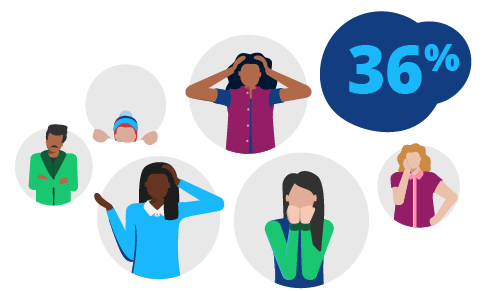
36% Report Experiencing Severe Stress
2. Managers Hit Crisis Levels
No group felt the pressure more acutely than people leaders. Nearly 47% reported severe burnout—numbers that should give any organization pause. These leaders are being asked to support well-being, drive performance, manage change, coach teams, and adopt new technologies, often without the support or training to do so sustainably.
They are operating in a widening gap between executive expectations and the day-to-day realities of employee needs. And when managers falter, entire teams feel the impact. Building manager resilience and capability isn’t optional, it’s foundational.
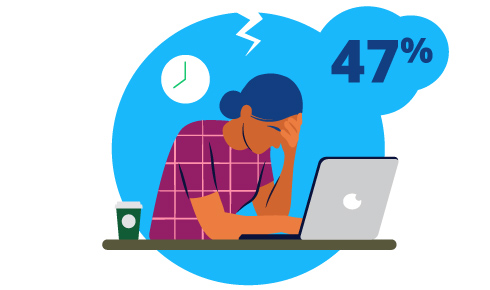
47% of People Managers Reported Severe Burnout
3. Meetings Became a Major Stress Multiplier
Meetings continued to balloon in volume and intensity. For employees spending more than 15 hours per week in meetings, overwhelm skyrocketed. These workers weren’t just busy—they were cognitively depleted.
Many reported feeling that they had no time to actually work, forcing critical tasks into nights and weekends. This insight underscores a painful truth: meetings, when unchecked, harm clarity and decision-making. Redesigning meeting culture—purpose, cadence, and attendance—has become a strategic imperative for any organization looking to reclaim focus and reduce employee exhaustion.
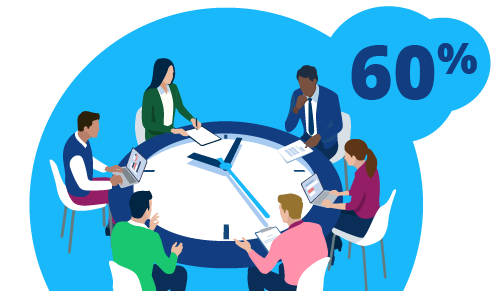
60% spent more than 15 hours a week in meetings reported severe stress levels.
4. Frequent Feedback Became a Secret Support System
The data was striking: teams that relied on weekly check-ins or quick debriefs felt dramatically more supported. 92% of employees receiving frequent, informal feedback felt their leaders had their back, compared to just 59% of those who only received annual or semiannual reviews.
Employees told us that consistent touchpoints created psychological safety, kept expectations clear, and made problems feel more manageable. In a year filled with uncertainty, regular feedback didn’t just boost performance—it grounded people. The path forward is clear: small conversations create big stability.
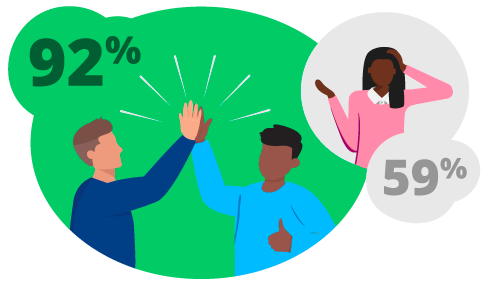
92% who receive weekly feedback feel supported by managers vs. only 59% who receive feedback annually.
5. Trust Didn’t Automatically Translate to Healthy Conflict
Even in high-trust cultures, the majority of employees—88%—still avoided conflict. This reveals a critical misconception: trust alone doesn’t make difficult conversations easier. People need skills, language, and confidence to navigate disagreement productively.
Without those tools, teams default to silence, resentment, or surface-level collaboration. Healthy conflict isn’t about fighting; it’s about surfacing ideas, challenging assumptions, and moving work forward. In 2025, we learned that conflict competence is the missing link between trust and true team effectiveness.
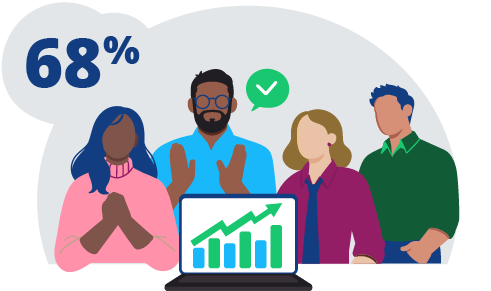
68% produce better results after working through conflict
6. The Empowerment Paradox Intensified
While 77% of employees reported feeling “empowered,” their experiences told a more complicated story. Many felt encouraged to take initiative but were not actually authorized to make decisions. This disconnect created frustration, bottlenecks, and stalled innovation.
Closing this gap requires pairing empowerment with clarity: Who decides what? What authority do people truly have? Empowerment without structure is wasted potential.
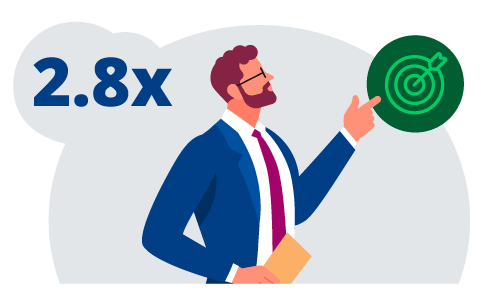
People who are given meaningful authority are 2.8x more likely to take initiative.
7. AI Sparked Curiosity and Anxiety
AI adoption surged in 2025, and employees responded with a blend of optimism and apprehension. While 68% said they were excited about AI’s potential, over half of managers reported feeling unprepared to lead AI-driven change.
This readiness gap posed a real challenge: employees looked to their managers for vision and confidence, while managers themselves often felt unclear on what AI meant for workflows, expectations, or performance. Organizations now face a pivotal moment: to make AI an enabler, not a disruptor, leaders must be equipped with both the knowledge and the communication skills to guide their teams forward.
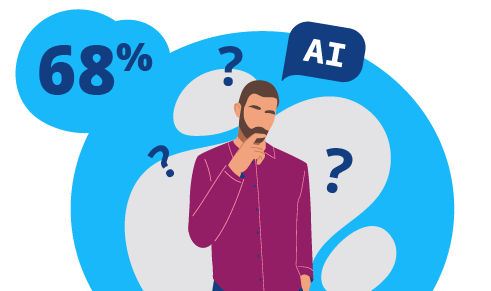
68% report feeling excited or curious about AI.
8. Only a Small Fraction of Employees Truly Thrived
Just 17% of workers landed in the “sweet spot” where motivation was high and stress manageable. Most employees were operating at one extreme or another—burned out, disengaged, or stretched to unsustainable limits.
Striking the balance to find that sweet spot is about a combination of support, clarity, meaningful work, and manageable load. This insight reinforces a crucial point: employee experience can’t be treated as a one-size-fits-all initiative. Organizations need a more nuanced understanding of what fuels people and what drains them.
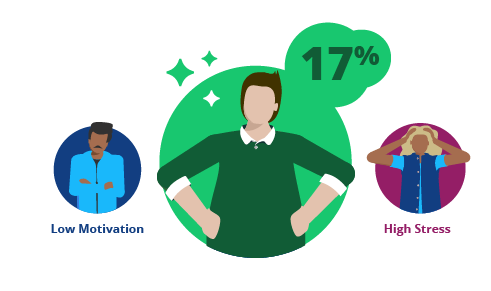
Only 17% are in a “sweet spot” of high motivation and manageable stress.
9. Human Skills Emerged as the Real Performance Engine
This year reaffirmed what our research has long shown: emotional intelligence, effective leadership, and strong interpersonal skills were the top predictors of high-performing teams. Even as technology advanced, what set successful teams apart wasn't the tools they used—but the dynamics they created.
Leaders who fostered psychological safety, clarity, and trust saw teams that adapted faster, collaborated better, and delivered more consistently. In an increasingly digital landscape, human connection proved to be the competitive advantage.
Top 2 Predictors of High Performance

Effective Leadership

Emotional Intelligence
10. 2025 Proved Performance Starts with People
Across all our findings, one truth rose above the rest: organizations thrive when people do. In a year marked by rapid change, complex debates about work models, and tighter-than-ever resources, human-centered leadership became the bedrock of performance.
Trust, clarity, well-being, and skillful communication are no longer “nice-to-have”—they are the conditions under which work can actually happen. The future of performance isn’t about squeezing more efficiency from people. It’s about creating environments where people have what they need to contribute their best.
Taken together, these insights paint a picture of a workplace at a crossroads—one filled with stress and uncertainty, but also with possibility. The data from 2025 makes something unmistakably clear: performance, innovation, and growth don’t emerge from pressure alone. They emerge from people who feel supported, connected, and trusted.
This year showed us that the fundamentals matter more than ever. Managers need support, not just expectations. Employees need clarity, not just empowerment. Teams need trust, not just skills. And organizations need to invest in the human elements of work with the same rigor they apply to technology, process, and strategy.
As we look toward the future, the path forward isn’t complicated—but it is intentional. Build healthier systems. Equip leaders for the realities of modern work. Create cultures where conflict is constructive, feedback is continuous, and well-being is non-negotiable. When organizations commit to these principles, people don’t just survive, they thrive. And when people thrive, performance follows.
Wiley’s suite of professional solutions provides a structure and common language to help empower entire organizations with the skills needed to get to the next level. From building better teams with The Five Behaviors®, and improving understanding to create engaged, collaborative, and adaptive cultures with Everything DiSC® on Catalyst™, helping you make confident hiring decisions with PXT Select®, or unlocking the power of leadership at every level with The Leadership Challenge®, Wiley has innovative solutions that help make the workplace a better place.
Catalyst’s newest offering, Worksmart, drives manager performance and is an essential tool for managers that helps them tackle real-world challenges in the moment, with confidence. Featuring five targeted learning modules facilitated by a Practitioner, in about an hour each, that provide action plans managers can apply immediately with their teams to tackle real-world challenges such as those featured in Wiley Workplace Intelligence research.
Wiley Workplace Intelligence conducts in-depth research on key workplace issues by gathering insights from individual contributors, managers, and leaders. Wiley Workplace Intelligence then analyzes these findings to provide actionable solutions that are shared in our blog.
Did You Like This Content?
Join our newsletter to get insights, updates, and more!
