The Ripple Effect of Stress at Work

Jul 24, 2026 | 5 min read
Have you ever wondered if moods are contagious? Picture it: you walk into the office or fire up the computer on a Monday morning, and your colleagues are happily chatting about their weekends. They have coffee in hand, a smile on their faces, and are excited to start a new day. Suddenly, the stress of an irritating commute or frazzled school drop-off doesn't loom quite as large, and you feel inspired and ready to dive into the week.
On the other hand, you could have had a lovely morning, starting slowly with a nice yoga flow or favorite podcast, determined to start the day on the right foot and tackle those deliverables that have been piling up. Then you start your first meeting, and everyone is crabby, overwhelmed, stressed. One person starts to complain about unreasonable deadlines or imperfect processes, and your quiet sun salutation feels like it was a million miles away and you, too, start to think of all the things that stress you out. And before you know it, everyone is overwhelmed.
While these examples may feel extreme, they aren't uncommon. Every workplace is prone to the messier side of human behavior, especially in an era of rapid change, high stress, and relentless headwinds.
New research from Wiley Workplace Intelligence surveyed 1,591 people on their stress and burnout, and the findings deliver a wakeup call as we enter the second half of 2026: stress doesn't stay contained to the person carrying it. It moves through a team, often faster than anyone notices.
Stress Moves Down the Org Chart
The clearest signal in the data is about leadership. Employees with very or extremely stressed managers rate their own stress 1.3 points higher than those with calmer managers. What a manager shows on the outside travels directly to the people who report to them.

Employees with stressed managers rate their own stress higher.
Managers aren't the only source, though. Peer-to-peer stress spreads at a moderate to strong rate, one that actually outpaces manager-to-employee contagion. A team's daily climate, the tone in a shared chat channel or the energy in a meeting is its own transmission line. Stress management, in other words, can't be treated as a manager's job alone. Stress contagion is defined as an unconscious process of “catching” someone’s stress levels through social and biological cues. Stress absorption takes that a step further and is when individuals absorb the stress of others on a physical level as if it is their own stress. It can be a shared, team-wide condition, and it helps explain why one frustrated voice in a meeting can shift the mood of an entire room within minutes.
This also reframes how organizations should think about intervention. A single stressed manager is a visible, easy-to-name problem. A stressed team culture is quieter and harder to trace, but the data suggests it may be doing just as much, if not more, to shape how people feel day to day.
What Actually Stops the Spread
The research also points to what breaks the cycle, and it comes down to two things: trust and action.
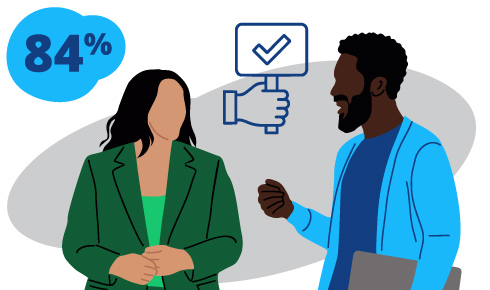
84% feel psychologically safe after making a mistake.
We found that 84% of employees feel psychologically safe after making a mistake, making it the single most consistent buffer against stress contagion in the data. When people trust that a relationship holds steady under pressure, a manager's stress is far less likely to become the whole team's stress. Safety doesn't remove the stress; it stops it from spreading.
The second protective factor is responsiveness. 60% of employees say their manager takes real action on burnout, not just an acknowledgment. Empathy alone doesn't buffer contagion. Action does. Naming the problem aloud and following it with a concrete change, whether that's redistributing work or adjusting a deadline, is what absorbs pressure before it moves down the line.
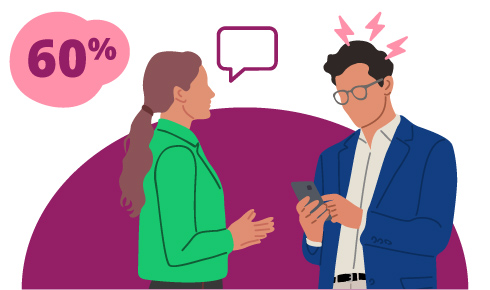
60% say their manager acts on burnout.
What Leaders Can Do
The research points to specific, practical actions rather than vague encouragement to "manage stress better."
Name it before it spreads. Managers who acknowledge their own stress openly, rather than masking it, give their teams language for what's happening instead of leaving people to absorb an unexplained tension.
Protect the moments right after a mistake. Psychological safety is built and tested most in these windows. How a manager responds in the first few minutes after something goes wrong does more to buffer future stress than any wellness policy.
Follow concern with action, not just empathy. A sympathetic conversation about burnout that goes nowhere doesn't buffer anything. Redistributing a task, adjusting a deadline, or protecting someone's calendar for a week does.
Watch the team climate, not just the manager. Because peer-to-peer contagion outpaces manager-to-employee contagion, investing only in manager training misses half the picture. Team norms around venting, workload complaints, and how stress gets talked about in the room matter just as much.
The Bottom Line
Leaders can't control every stressful moment that lands on their team, but they do have real influence over whether that stress spreads or stops with them. Naming stress when it shows up, following it with a visible next step, and protecting the psychological safety already built into a team are what separate organizations where pressure compounds from organizations where it gets absorbed.
Stress may be contagious, but so is stability. The teams that get ahead of this aren't the ones with zero stress. They're the ones that catch it, name it, and act on it before it spreads.
Wiley’s suite of professional solutions provides a structure and common language to help empower entire organizations with the skills needed to get to the next level. From building better teams with The Five Behaviors®, and improving understanding to create engaged, collaborative, and adaptive cultures with Everything DiSC® on Catalyst™, helping you make confident hiring decisions with PXT Select®, or unlocking the power of leadership at every level with The Leadership Challenge®, Wiley has innovative solutions that help make the workplace a better place.
Wiley Workplace Intelligence conducts in-depth research on key workplace issues by gathering insights from individual contributors, managers, and leaders. Wiley Workplace Intelligence then analyzes these findings to provide actionable solutions that are shared in our blog.
Did You Like This Content?
Join our newsletter to get insights, updates, and more!
